How to Monetize Your App Without Ads: Practical Models That Work in 2026
- Ad-free revenue ties to user satisfaction, improving retention.
- In-app purchases, subscriptions, and freemium cover most cases.
- App category and usage frequency matter more than one "best" model.
- Most established apps combine two or more models over time.
- The EU's DMA already shapes available app store payment options.
Why Going Ad-Free Actually Works
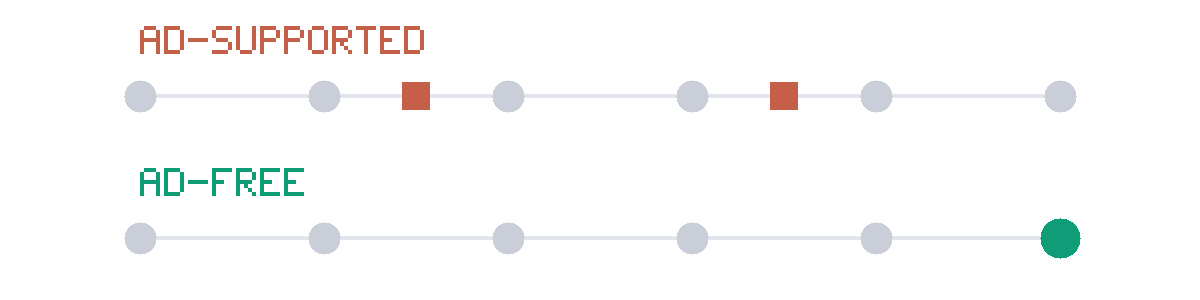
Ad-supported apps generate revenue by exposing every session to interstitials, banners, and rewarded video, but that approach carries a direct cost: degraded user experience. Each ad unit interrupts a task, slows load times, and raises the odds that a session ends early. Choosing to monetize an app without ads removes that friction, and the effect on user retention is measurable. Products that earn through purchases or subscriptions rather than impressions have a built-in incentive to stay fast, uncluttered, and focused on the core task, because revenue depends on user satisfaction rather than exposure counts.
This shift also changes how ARPU is calculated and managed. Ad revenue depends on traffic volume and fill rates set largely by demand partners, which limits how much control a single developer has over pricing. Purchase- and subscription-based models tie revenue directly to product value, giving developers more influence over pricing, packaging, and forecasting. Because non-paying users add negligible cost beyond hosting, churn rate becomes the primary metric to manage instead of impression volume, and small retention gains compound into meaningful revenue over the life of a product.
The Core Ad-Free Monetization Models
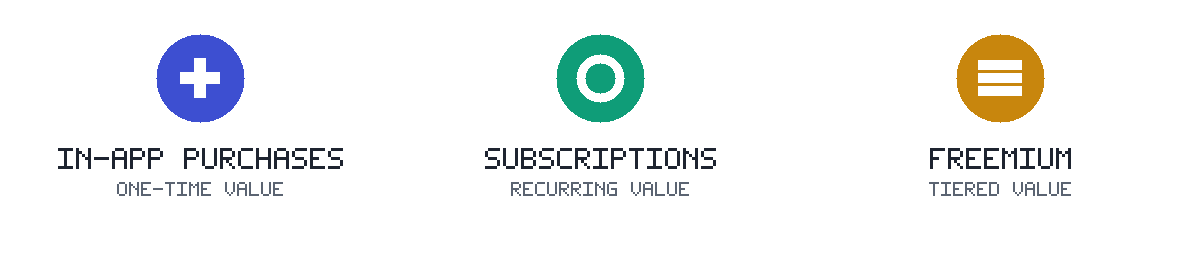
Once the decision to monetize an app without ads is made, the remaining question is which revenue model fits the product. Three models cover most cases: in-app purchases, a subscription model, and freemium structures, each suited to a different usage pattern and value proposition. A small set of secondary models, including hybrid approaches, data licensing, passive monetization SDKs, and alternative payment rails, can supplement or replace these primary options depending on the app category and audience. The sections below outline how each model works, where it performs best, and which metric matters most when evaluating it against alternatives.
In-App Purchases
In-app purchases let a user buy a specific item, feature, or unit of virtual currency once, with no recurring charge. The model performs best where value comes in discrete units, such as extra lives or cosmetic items in games, or a single advanced feature in a productivity tool. Because there is no subscription commitment, the barrier to a first purchase is lower, which often produces higher initial conversion than subscription offers in the same category.
The tradeoff is that purchases do not create predictable recurring revenue on their own. Developers usually track ARPU alongside purchase frequency to see how pricing affects total revenue. RevenueCat's Virtual Currency tooling, free for apps under $2,500 in monthly tracked revenue, is one option for managing consumable purchase flows without building billing logic from scratch.
Subscriptions
Subscriptions charge users on a recurring basis, usually monthly or annually, in exchange for ongoing access to content or functionality. This model fits apps that deliver continuous value, such as fitness plans, educational content, or productivity software used daily. Because revenue recurs automatically, a subscription model produces more predictable cash flow than one-time purchases, provided churn rate stays low enough to sustain growth.
Adapty's case study on ABBYY documents a concrete outcome of subscription optimization: after adjusting onboarding and paywall placement, the company reported a 58.5% increase in annual subscription revenue, with conversion improving from 1.37% to 1.54%. That result illustrates why subscription monetization is typically treated as an ongoing optimization process rather than a one-time setup, since small changes in paywall timing or pricing tiers can shift both conversion and retention.
Freemium
Freemium apps offer a functional free tier to the entire user base while reserving advanced features, capacity, or content for paying users. The structure works well when the free tier is useful enough to build a large audience, since that audience becomes the pool from which paying users convert. Statista data from January 2025 shows that roughly 97% of apps on Google Play are free to download, meaning most apps already operate inside some version of a freemium structure.

The challenge with freemium is calibrating the free tier. Too generous, and few users have a reason to upgrade; too limited, and the app fails to build the audience needed for conversion. Freemium is typically paired with in-app purchases or a subscription model as the upgrade path, rather than functioning as a standalone method.
Other Models: Hybrid, Data Licensing, Passive SDKs, Alternative Payments
Beyond the three primary models, a few secondary approaches can supplement ad-free revenue without reintroducing advertising content. These typically pair with a primary model rather than replace it.
- Hybrid: a base subscription plan covers core functionality, with optional in-app purchases for add-ons.
- Data licensing: aggregated, properly consented usage data can be licensed to research or analytics partners.
- Passive monetization SDKs: background utilities, such as VPN tools, generate revenue from device resources rather than user attention.
- Alternative payment rails: routing payments outside a platform's default billing system can reduce transaction fees, subject to store policy.
None of these require an ad unit inside the app, and most run alongside a primary purchase or subscription model with minimal added friction.
Choosing the Right Model for Your App
Selecting how to monetize an app without ads depends heavily on category and usage pattern. A habit-forming utility used daily suits a subscription far better than a one-time purchase, while a game built around discrete progression moments suits in-app purchases. Matching the model to how and how often the app is used, rather than defaulting to whichever model is easiest to implement, is what determines whether ARPU meets targets over time.
The table below summarizes common app categories against a primary and secondary monetization model, along with the metric most useful for tracking performance in each case. Categories are grouped broadly, since most real products blend several use cases and may need to test more than one model before settling on a primary structure. Regulatory context matters too: the EU's Digital Markets Act, in force since March 6, 2024, applies to gatekeeper platforms including Google Play, and a related €890 million fine issued to Google by the European Commission has increased scrutiny on default billing terms across major app stores.
| App category | Primary model | Secondary model | Key metric |
|---|---|---|---|
| Casual games | In-app purchases | Hybrid (subscription VIP tier) | ARPU |
| Mid-core / RPG games | In-app purchases | Data licensing (aggregated telemetry) | ARPPU |
| Fitness and wellness | Subscription model | Freemium free tier | Churn rate |
| Education and learning | Subscription model | In-app purchases (course packs) | Retention rate |
| Productivity tools | Freemium | Subscription upgrade | Conversion rate |
| Utilities and VPN | Passive monetization SDK | Freemium | ARPU |
| Photo and creative editing | In-app purchases | Subscription (pro tier) | ARPPU |
| Finance and budgeting | Subscription model | Alternative payment rails | Churn rate |
Tools and Resources
Implementing any ad-free monetization model requires infrastructure for billing, entitlement tracking, and distribution compliance. The table below lists four resources used across these tasks: two purchase management platforms, the app store consoles for pricing and billing, and a comparison resource covering monetization approaches more broadly. Each entry is presented on equal terms.
| Tool | Purpose | Category |
|---|---|---|
| RevenueCat | Cross-platform subscription and purchase management | Billing infrastructure |
| Adapty | Subscription analytics and paywall A/B testing | Billing infrastructure |
| App Store Connect / Google Play Console | Native iOS and Android pricing, billing, and distribution management | Platform console |
| a comparison resource for monetization models | Comparative reference for teams weighing ad-supported and ad-free approaches | Comparison resource |
Conclusion
None of the models covered here require displaying advertising content to generate revenue, and most established apps combine at least two of them over their lifecycle. A game might launch with in-app purchases and later add a subscription tier for its most engaged users; a productivity tool might start freemium and shift toward subscription once usage patterns are clear. The right starting point depends on how the app delivers value and how often users return to it, and the metrics in the table above are a reasonable starting point for measuring whether the chosen model is working.
Frequently Asked Questions
What is the most profitable way to monetize an app without ads?
There is no single most profitable model; it depends on app category and usage frequency. Habit-forming apps used daily typically perform better with subscriptions, while apps with discrete progression moments, such as games, often perform better with in-app purchases. ARPU and churn rate together show which model is working.
Can freemium and subscription models be combined?
Yes, this is a common structure. A freemium app offers a free tier to build an audience, then uses a subscription as the upgrade path for users needing advanced features. This hybrid combination lets a single app capture both new users and recurring revenue from engaged ones.
How does removing ads affect user retention?
Removing ads eliminates a recurring interruption that raises the odds a session ends early, which tends to improve session length and return visits. Because ad-free revenue depends on user satisfaction rather than impression volume, product teams have a direct incentive to keep the experience fast and focused, supporting retention over time.
Are passive monetization SDKs a reliable way to monetize an app without ads?
Passive monetization SDKs, such as VPN or utility-based tools, generate revenue from background device resources without showing ad creative, but they typically produce lower revenue per user than direct purchases or subscriptions. They work best as a secondary revenue stream alongside a primary purchase or subscription model, not as the sole method.
What role do app store policies play in ad-free monetization?
App store billing rules directly affect which payment methods and pricing structures are available. The EU's Digital Markets Act, in force since March 2024, has already required gatekeeper platforms including Google Play to adjust default billing terms, and further changes are likely to affect alternative payment rails going forward.